
"La Corrala" de la Verneda
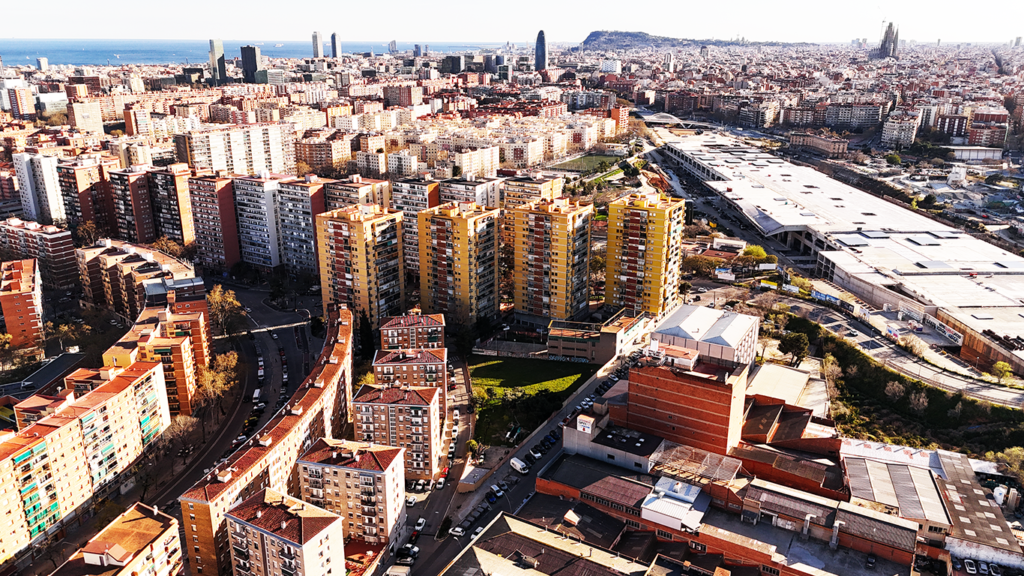
La Verneda is not just a place—it’s a convergence. Between the rocky foothills of Collserola and the alluvial plain of the Besòs, between city and margin, memory and momentum. It sits at the northeast edge of Barcelona, folded into the district of Sant Martí, neighboring Sant Andreu and the vast infrastructural transformation of La Sagrera.
Originally a stretch of farmland under the municipality of Sant Martí de Provençals, La Verneda’s story is tightly bound to the accelerated industrial growth of the 19th and 20th centuries. When factories were banned within the walled city of Barcelona, they grew here instead bringing with them waves of workers and, later, blocks of dense housing to shelter them. From the 1950s onward, La Verneda became one of the city’s most rapidly populated neighborhoods, evolving not from plan but from necessity.
Today, La Verneda is among the densest urban fabrics in Barcelona and indeed, in all of Spain. Not only in built volume, but in the layering of histories, struggles, and forms of life. Its urban language speaks in vertical lines: the high-rise social housing towers of the 1960s, tightly knit together, and the interstitial spaces between them some paved, some improvised, some simply waiting.
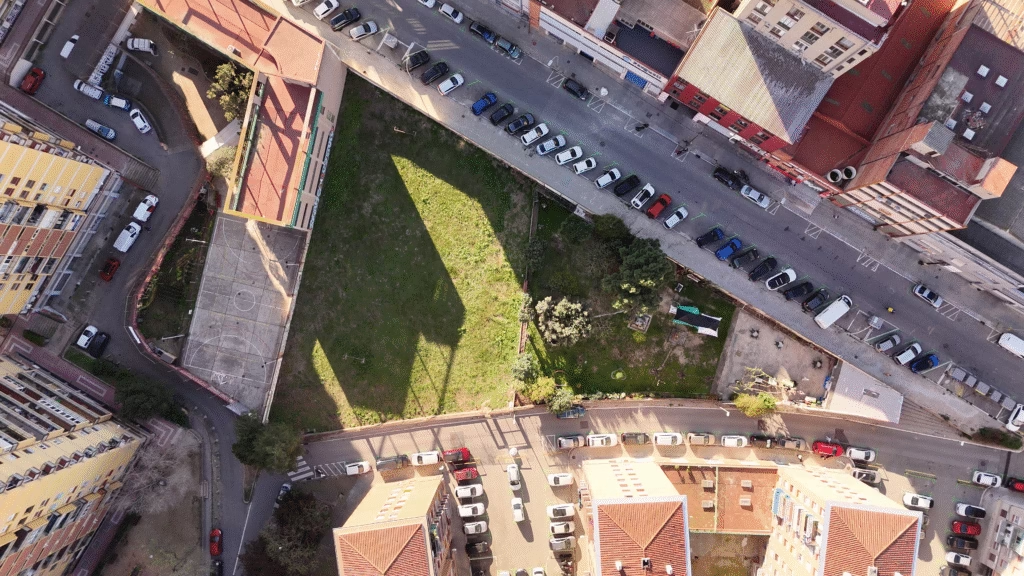
I visited the neighborhood with my drone, searching for perspective, for distance, to see its structure from above. What emerges from this aerial gaze is a portrait of a city within a city: bounded by infrastructure, bisected by train lines, yet pulsating with life and potential. From above, the borders blur; La Verneda becomes legible as a kind of hinge between past and future Barcelona.
What once was farmland became a dormitory neighborhood, what once were slums, like the now-disappeared La Perona, became parks and promises. But that transformation is ongoing. The shadow of the future Sagrera station and the Prim sector looms large: poised to stitch new neighborhoods together.
La Verneda, seen from above, is a dense and restless composition. A place where urban pressure, memory, and resistance fold into one another. A place that doesn’t ask for solutions, but attention.
La Verneda — Architecture as Frame and Void
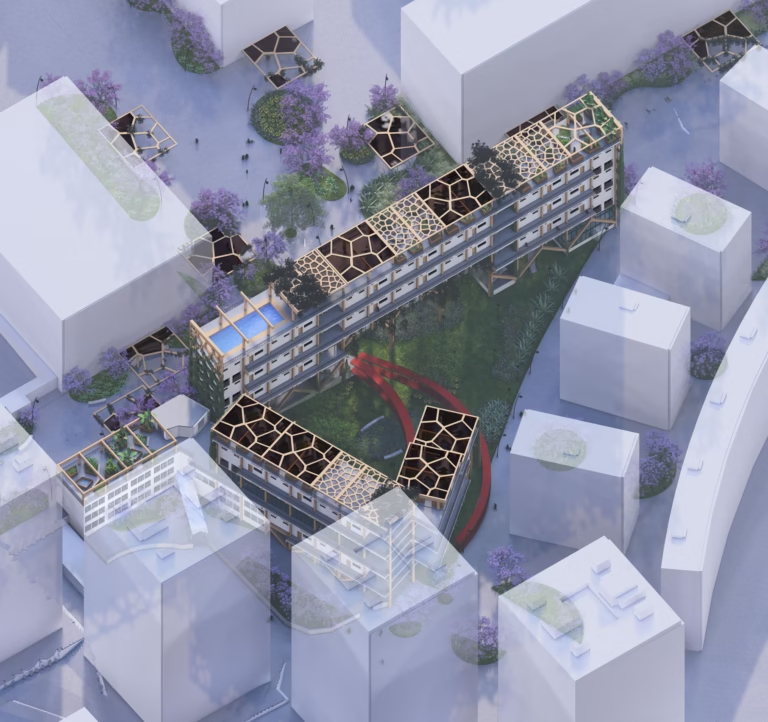
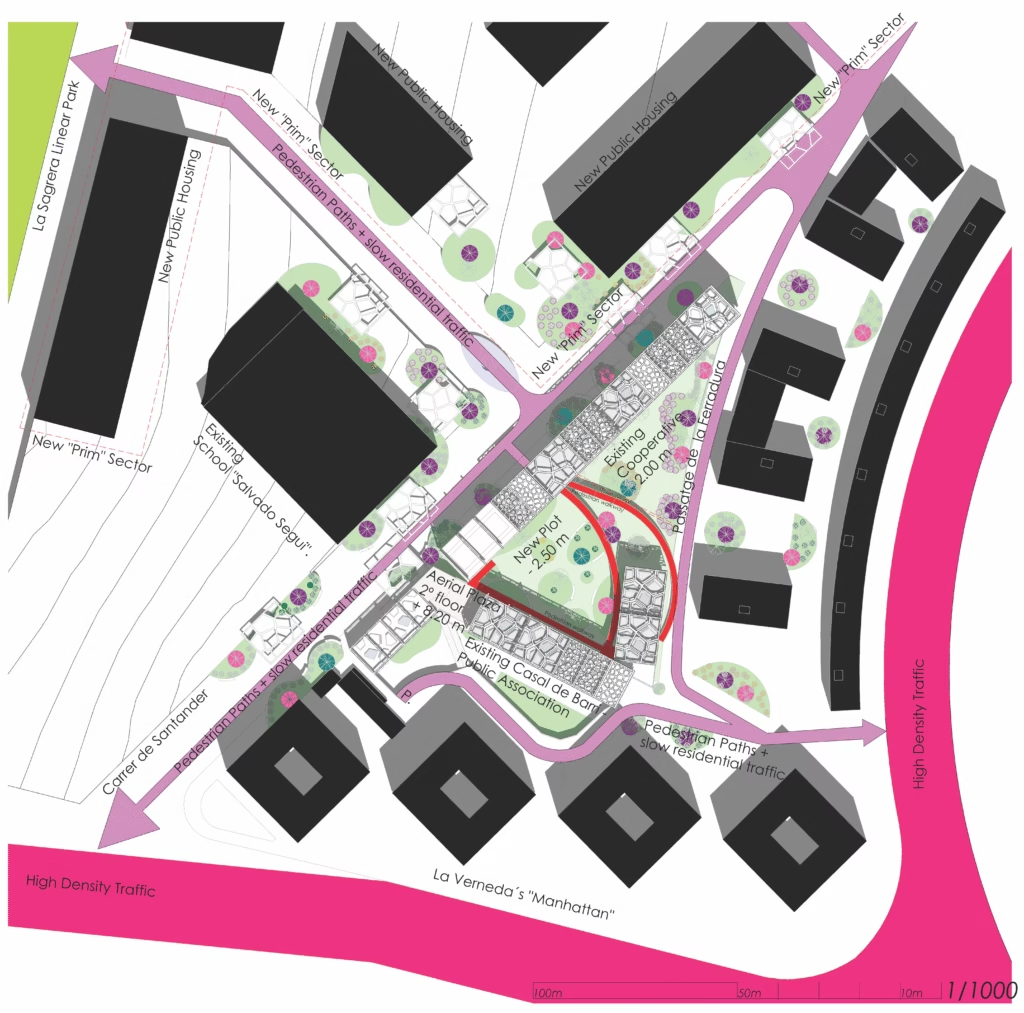
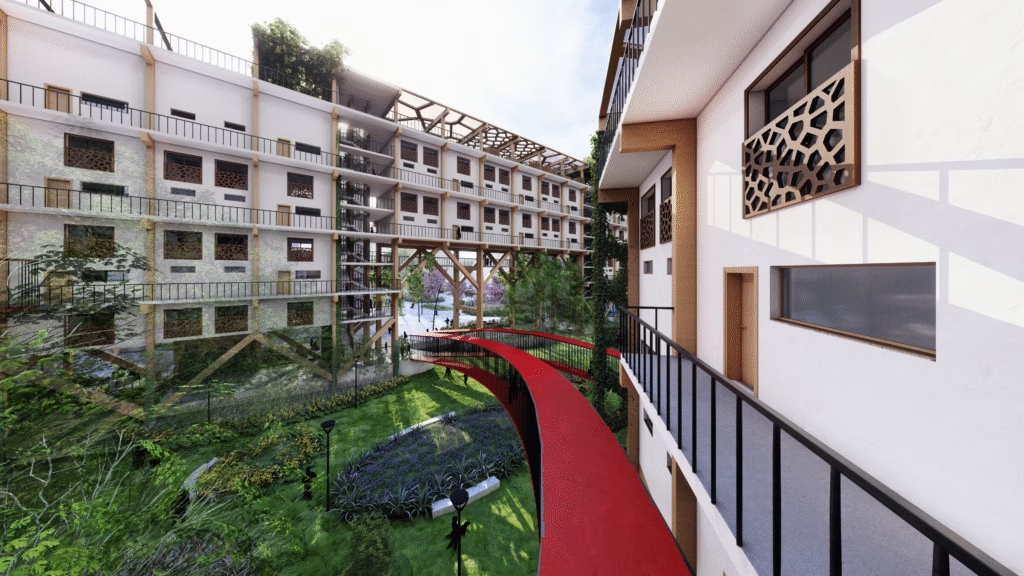
This project engages a public plot located between the residential fabric of the 1960s and the future redevelopment of the Prim Sector in La Verneda, Barcelona. The intervention is defined by a simple decision: to lift the construction and free the ground. The soil is not occupied; it is allowed to remain as a vegetal, circulatory, and relational space.
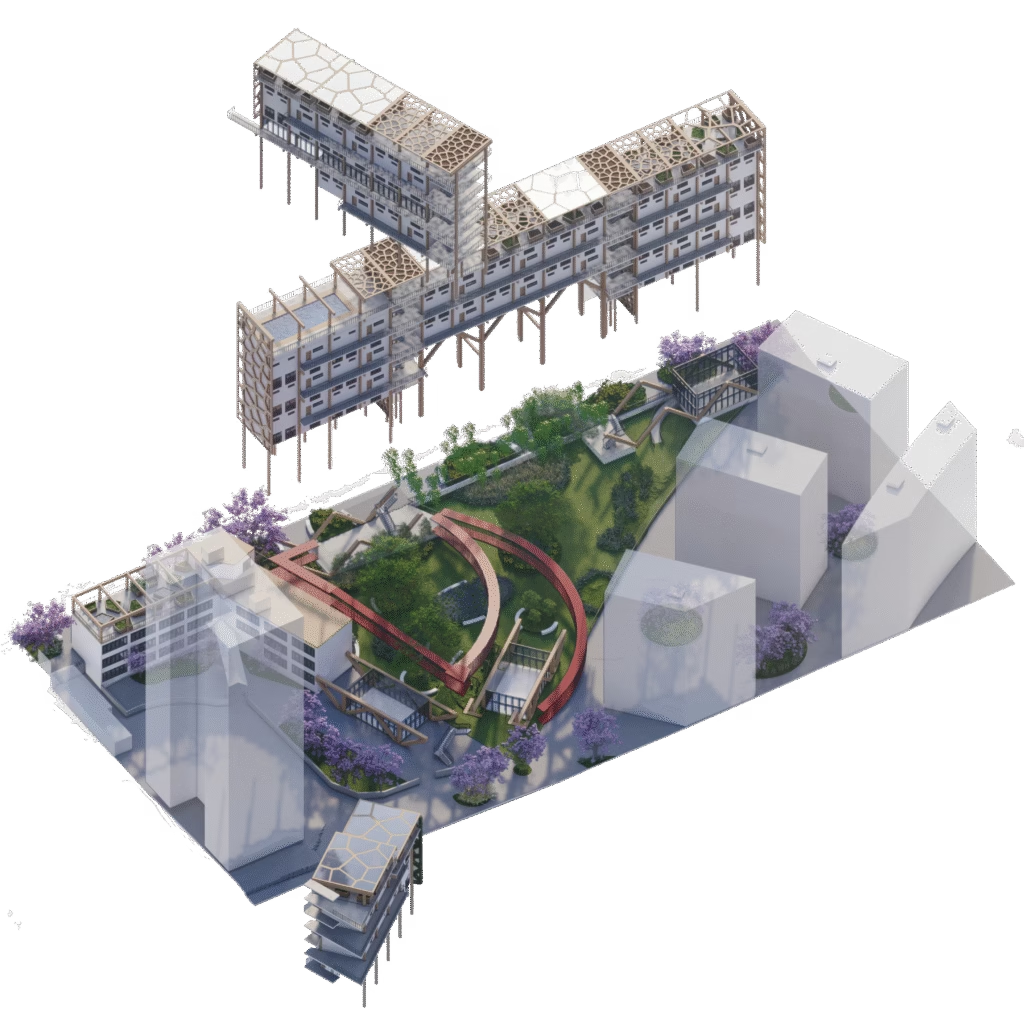
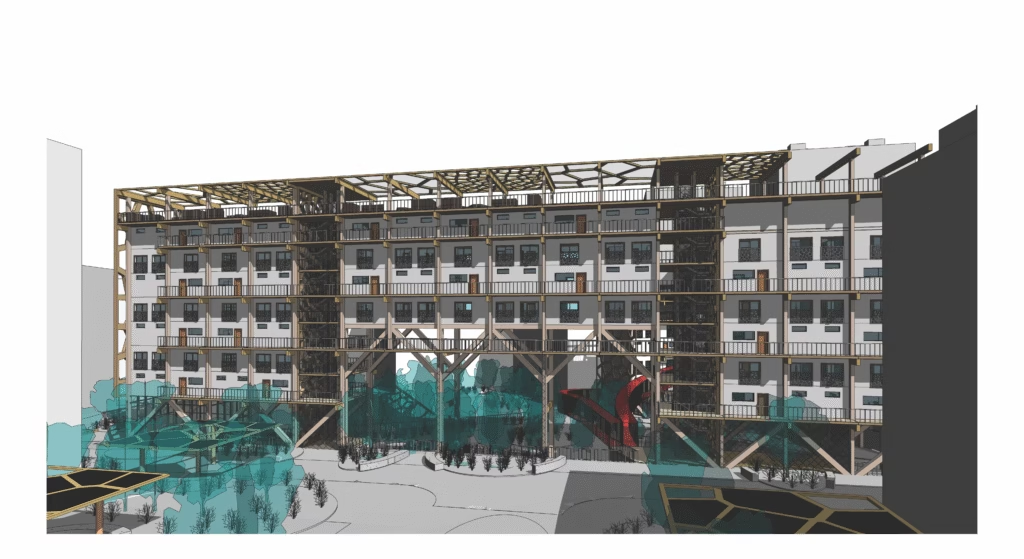
The proposal organizes three housing bars built in CLT and raised on a series of piloti. The system is monomaterial, dry, and prefabricated, designed to reduce on-site impact and facilitate future maintenance. Construction is understood more as assembly than as conventional building.
At ground level, the continuity of the terrain is preserved, structured through planted islands, sustainable drainage, and pedestrian paths. The existing difference in level between the street and the plot becomes a sequence of ramps and platforms that act as transitions between the different areas.
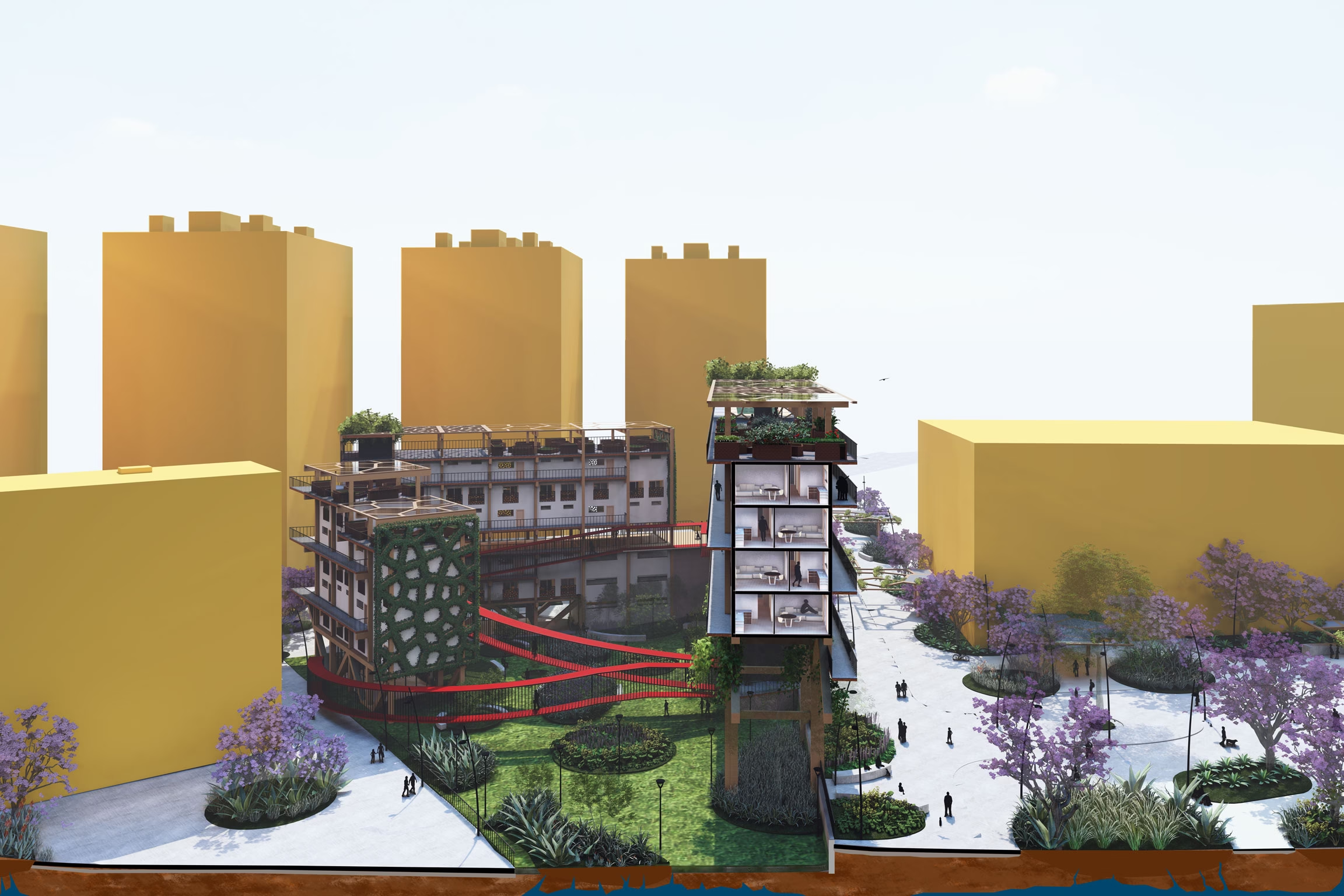
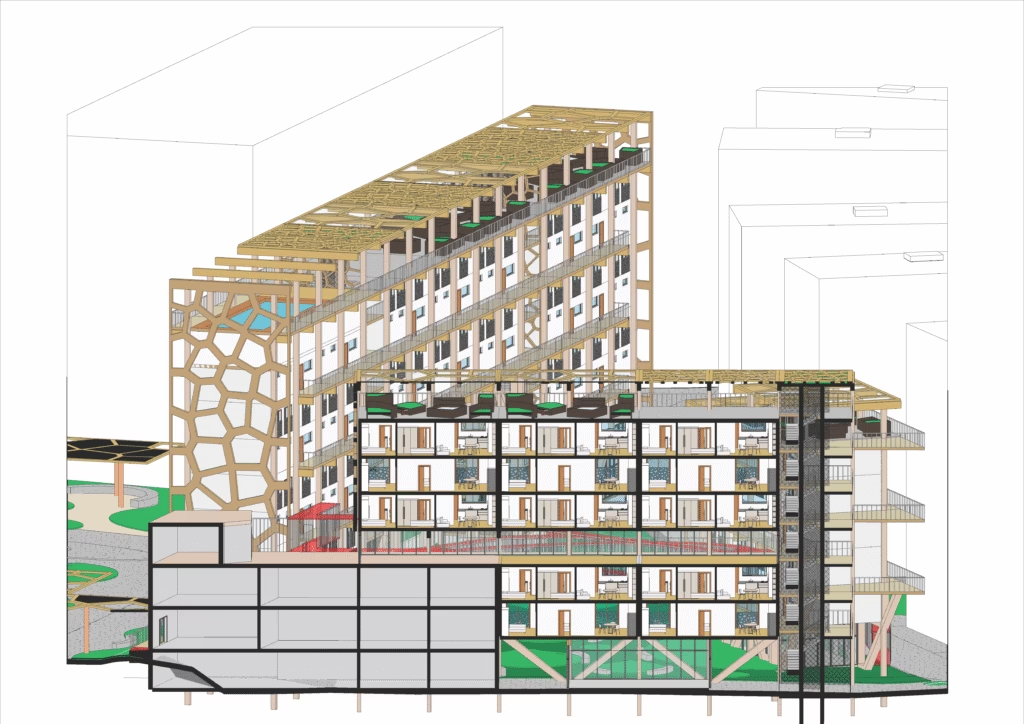
The existing Casal de Barri La Verneda is integrated into the project without being displaced. On its roof, an elevated civic plane is developed, connecting the facility to the upper circulation routes and to the housing ensemble. The other significant element of the site, the cooperative garden, is incorporated through a dedicated access and a formal acknowledgment within the overall scheme.
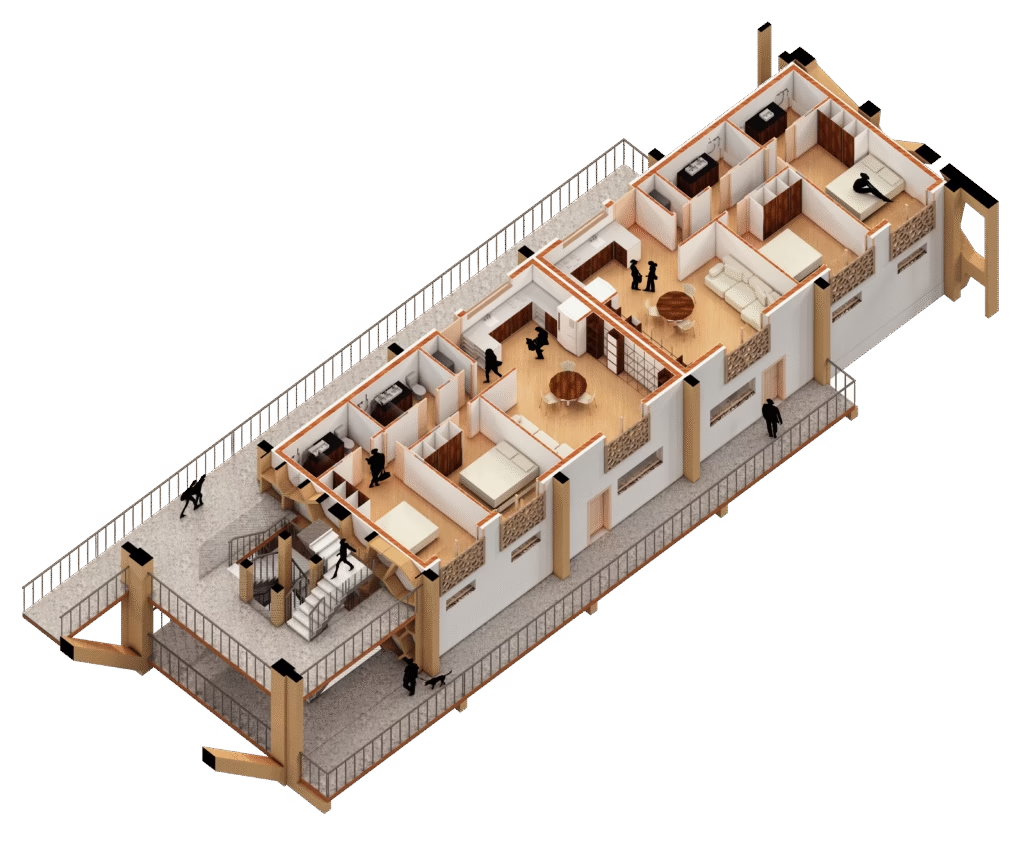
The dwellings follow a single typology: a two-bedroom unit with all wet areas consolidated along a continuous band to simplify installations. Each room opens to the exterior through French balconies. The aim is to encourage constant interaction with the shared space rather than reinforce the idea of a self-contained interior.
The building section reveals the project’s primary intention: an elevated frame that allows the plot to remain porous and open, while domestic life rests on a light, repeatable system. There are no large iconographic gestures; the strategy is almost infrastructural.
The project is oriented toward dotacional public housing and toward coexistence with existing community initiatives. It is conceived as a structure that accompanies the neighborhood without displacing its ongoing activities, and that adapts to an urban context in transformation.
I would like to express my gratitude to the people who accompanied me throughout this work. To the architect Fran Villaescusa (https://franvillaescusa.com/), for his insights into spatial relationships and the structure of the project. To the biologist Alejandro Sotillos (https://www.researchgate.net/profile/Alejandro-Sotillo), for his guidance on soil as a living medium and on the presence and protection of urban fauna. To the landscape architect Karen Ferrari (https://karenferraripaisajismo.com/), for her thoughtful selection of vegetation. To my friends Ignacio and Israel, to Toni from Menorca, for their comments and their support. Finally to Neyron Silva (https://www.linkedin.com/in/neyronsilva/) , who helped me assemble and render many of the images in the panels—thank you for your patience and your presence.
On mobile, PDFs open better in the native viewer:
📄 Panel 1.